

Managing multiple high-priority projects looks good on a résumé.The person doing it pays for that.When everything is a priority, nothing is.Your calendar surrenders to everyone else’s priorities.
Your inbox eats the hours you meant to spend on work that actually matters.
Your meetings double overnight.
Unannounced, every stakeholder is in your ear, convinced their fire is the only one burning
You start working through lunch.
You answer messages while sitting in meetings.
You take unfinished work home.
Inevitably, something strange happens. You are working harder than ever- accomplishing less of what actually matters.
Here, workplace burnout stops warning you and starts breaking you.
Burnout rarely looks like laziness or a lack of ambition.
More often, it is too many important things fighting for the same limited attention.
If your only strategy is to work harder, you are using willpower as a risk-management system.
This strategy breaks under pressure.
The messier your environment gets, the more you need structure that survives imperfect decisions.
You need a Personal Operating System.
In this guide, I’ll give you one practical intervention from that system that you can use immediately.
I’ll teach it completely. I will also show you why the mechanism alone leaves you exposed —and why preventing burnout when managing multiple high-priority projects requires an operating system.
Why Multiple High-Priority Projects Create Burnout

The bottleneck lies in more than project volume.The swarm of open loops keeps firing demands at your attention.
Imagine you are responsible for four major initiatives.
Project A needs a client presentation.
Project B has a deadline approaching.
Project C has a team member waiting for your decision.
Project D contains a single point of failure that will escalate into a heavy financial liability if ignored.
Then your inbox introduces Project E.
Your manager introduces Project F.
A client introduces Project G.
Meanwhile, your calendar injects another three hours of meetings into your day.
Nothing has technically gone wrong.
Yet your brain is already overloaded.
Why?
Simple: every unresolved commitment taxes active cognitive bandwidth.
Your attention is being taxed before you even begin the work.
My blueprint describes this problem as friction: loose ends, unresolved commitments and tasks without a clear home consume attention in the background. That cost is easy to underestimate.You don’t receive an invoice for it.
You simply notice that concentrating feels harder.
You reread emails.
You switch between applications.
You forget what you were doing.
You start one task.
Then another.
Then another.
At 6 PM, you are exhausted.
By default, the evening audit forces the calculation:
‘What did I actually execute today?’
The Burnout Mistake High Performers Make

When overwhelmed, ambitious people often respond by increasing intensity.
The pressure pushes them to:
⦁ Wake earlier.
⦁ Work later.
⦁ Eliminate breaks.
⦁ Check email more frequently.
⦁ Download yet another productivity application.
These people create a longer task list.
They promise themselves:
«”Tomorrow I will be more disciplined.”»
This feels responsible.
Also, it breeds an ugly feedback loop.
More pressure → more activity → less clarity → more mistakes → more catch-up work → more pressure.
The solution rarely comes from shrinking your ambition.
It comes from building better operating architecture.You sit down to work, and suddenly you are renegotiating your entire workload.
The One Protocol: Work in Attention Zones

One of the systems in Building Personal Systems for Stability is the Daily Operating System.Its purpose reaches far beyond conjuring a prettier schedule.The Daily Operating System carves out tailored operating conditions for divergent types of work.
The framework includes:
- Deep work
- Shallow work
- Recovery
- Shift points between them
Your attention is more valuable than your time.Rather than treating your entire workday as one undifferentiated block of “work,” divide it into three operating zones.
Zone 1: Deep Work

Deep work is where you perform tasks that require your highest-quality thinking.
Examples might include:
- writing an important proposal
- strategic planning
- analyzing complex information
- solving a difficult problem
- preparing a major presentation
- making a consequential decision
- developing something that requires concentration
During this period, your objective is not to process everything.
Your objective is to protect cognitive capacity.
That means reducing interruptions.
Close unnecessary communication channels.
Silence notifications.
Don’t casually browse your inbox.
Don’t combine strategic thinking with administrative processing.
Give one important piece of work your best available attention.
The mistake is thinking:
«”I have eight hours today, so I have eight hours for everything.”»
You don’t.
You have different quality levels of attention throughout the day.
Treating them as interchangeable is expensive.
Zone 2: Shallow Work
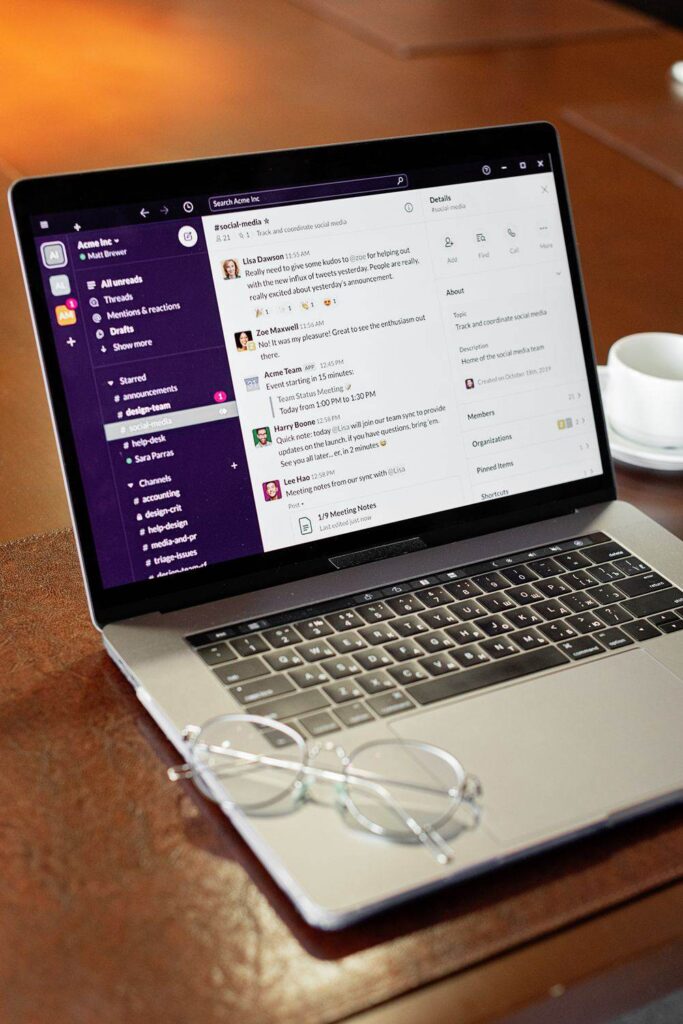
Shallow work is necessary. Regardless, never burn your peak mental horsepower on low-leverage execution.
This is where you process things such as:
- routine emails
- administrative tasks
- scheduling
- straightforward messages
- simple updates
- routine paperwork
- low-complexity follow-ups
The key is to batch this type of work.
Left unchecked, shallow work will overun your entire day.Give it a defined place.
Cognitive load is finite: allowing administrative tasks to break deep execution imposes an immediate switching penalty.
One message spawns another.
One notification triggers an investigation.
One quick response swallows twenty minutes.
Before you know it, your “focused workday” consisted of fragments.
My treatise describes the consequence clearly : important work can become fractured into interruptions, leaving you with shards of attention rather than depth.
Zone 3: Recovery

This is the zone people often delete first.
That’s a mistake.
Recovery defies the label of laziness.
Recovery remains a pillar of the operating system.
If every minute of your day is allocated to production, you eventually begin operating with degraded capacity.
Recovery threads a transition between demanding periods.It can be stripped to its bones:
- stepping away from your desk
- eating without working
- taking a walk
- sitting quietly
- ending a demanding block before beginning another
- etching genuine distance from work
Your career still deserves your full seriousness — while protecting the energy that keeps you performing at your best. A system that only knows how to accelerate eventually curdles into a system for exhaustion.
The Missing Piece: Shift Points

Don’t simply create three zones.Create shift points between them.
For example:
9:00–10:30 — Deep Work
↓
10:30–11:00 — Recovery
↓
11:00–12:00 — Shallow Work
↓
12:00–1:00 — Recovery/Lunch
↓
1:00–2:30 — Deep Work
↓
2:30–3:00 — Recovery
↓
3:00–4:30 — Shallow Work
Your exact times aren’t the point.
The principle is.
You are orchestrating a shift in the operating mode of your attention instead of asking yourself to perform every type of work simultaneously.
Your Four-Minute Setup

No shiny new app will save you. Tomorrow morning, take four minutes.
Write:
- What requires my highest-quality thinking?
Choose one important piece of work.
Put it inside your first deep-work zone.
- What can be processed later?
Collect routine emails, administrative tasks and simple responses into your shallow-work zone.
- Where will I recover?
Put at least one genuine recovery period into your day.
- Where will I switch modes?
Log the transition times. Lock down those zones without exception.
This is the readily attainable gain.Yet it can produce a surprisingly useful win.
The Quiet Win: Stop Spending Your Best Attention on Other People’s Priorities
Imagine you normally begin your morning by opening your inbox.
Within fifteen minutes, you have discovered:
A client needs something.
Your manager has asked a question.
A colleague wants approval.
A meeting has changed.
Someone has sent an “urgent” request.
You haven’t touched the strategic project you intended to work on.
Now imagine the alternative.
You begin with your protected deep-work zone.
You already know what deserves your highest-quality attention.
The inbox can wait.
For ninety minutes, you work on the thing that actually requires you.
When the deep-work period ends, you enter your shallow-work zone.
Now you process communication.
You are not ignoring work.
You are sequencing it.
That fork in the road can change the emotional experience of your day.Rather than spending your morning reacting to everyone else’s priorities, you have already made a deliberate investment in your own. Nobody claps for this one.
Even so, it only carries you partway. This step is mission-critical.
Why Attention Zones Alone Won’t Prevent Burnout

Suppose you implement the Daily Operating System tomorrow.
You protect deep work.
You batch shallow work.
You schedule recovery.
Excellent.
Now imagine what happens next week.
Your manager moves a deadline.
A major client changes requirements.
Your team needs you.
A personal problem appears at home.
A bill lands out of nowhere and your whole month rearranges itself.
Your carefully designed calendar no longer fits reality.
What happens now?
This is where most productivity advice falls apart.
The productivity industry teaches you to design an ideal day.
Real life doesn’t consistently give you ideal days.
Your system needs to know what happens when conditions change.So the Stability Blueprint doesn’t stop at the Daily Operating System.It includes structures for managing information and commitments, financial order, difficult decisions, review cycles and maintaining stability under pressure.
The Daily Operating System is a component.
The Personal Operating System is the architecture.
Look at What Happened to Michael

This is where the opus’s story of Michael takes root.
Michael wasn’t lazy.
He was busy.
Very busy.
He woke up already behind.
Messages were waiting.
His calendar contained overlapping meetings.
His tasks existed in several places: a notebook, a phone app, sticky notes and his head.
He moved continuously throughout the day.
He skipped lunch.
Michael answered emails during meetings.
He prepared for the next meeting while sitting in the current one.
At 6 PM, he was exhausted.
Despite working all day, he couldn’t name one thing he had actually finished.
That hardly qualifies as a motivation defect.
It is an operating-system failure.
Michael’s day had no sufficiently strong mechanism for deciding what deserved attention, where commitments belonged, or how competing demands should be processed.
He had activity.
What he lacked was architecture.
This Is Why “Just Manage Your Time Better” Proves Insufficient

Time management assumes that your biggest problem is the clock.Sometimes, the clock holds no blame. The real battle is with what keeps your attention on loan.
You can have eight available hours and accomplish very little meaningful work if those hours are continuously fragmented.
You can have a beautiful calendar and nonetheless feel overwhelmed when commitments exist everywhere.You can have an impressive morning routine and still collapse during a tough week.
The Personal Systems Blueprint draws a defining boundary between routines and systems.
A routine is a sequence of habits.
A system is a framework for producing reliable results across changing conditions.
That wedge shields you from total collapse. You don’t escape burnout by fine-tuning the hamster wheel. Build load-bearing systems so your life doesn’t completely destabilize when the normal day disappears.
Your System Needs a Circuit Breaker

Think about an electrical system.
When conditions turn hostile, a circuit breaker doesn’t say:
«”Try harder.”»
It interrupts the flow before the damage becomes worse.Your personal system needs a fail-safe.
Under mounting pressure, you must shed commitments.Prioritize what keeps the operation alive.
Delay what can wait.
Protect essential work.
Create recovery.
Return to stability.
The Personal Operating Manual codifies this through two hard safeguards: a circuit breaker and a survival mode. As conditions fray, the system shifts rather than blindly following the original plan.
That’s a much more sophisticated approach to workplace resilience.You aren’t aiming for a life insulated from chaos—you are forging a system engineered to execute the moment it hits
The $77 Difference: A System, Not Another Productivity Hack

You can find thousands of free productivity tips online.
You can download another task manager.
You can spin up another calendar.
You can watch another video about beating procrastination.
None of that necessarily gives you an operating framework.
So I built the thing I couldn’t find: Building Personal Systems for Stability — Take Back Control When Work Is Chaotic and Life Feels Like It’s Falling Apart
This $77 manual wasn’t built to hand you another pile of disconnected productivity tricks.
What it hands you is the architecture behind them.
Inside the broader framework are systems for:
- creating daily clarity
- protecting attention
- managing information and commitments
- organizing finances
- making difficult decisions
- reviewing and resetting your systems
- recovering when things go wrong
- maintaining stability under pressure
- closing the workday so your mind can disengage
The Daily Operating System is one component.
The Daily Success Loop is another.
The 5-Minute Reset is another.
The Recovery Loop is another.
Owning individual tactics gets you nowhere.
The power is in making them work together.
Stop Asking, “How Can I Work Harder?”

A better question is:
“What structure would allow me to keep functioning when my workload becomes unpredictable?”
This is the question behind a Personal Operating System.
Your career will have busy seasons.
Projects will collide.
Clients will change their minds.
Deadlines will move.
Managers will manufacture competing priorities.
Life will interfere with work.
Inevitably, work will collide with life.
You cannot eliminate uncertainty. However, you can build infrastructure which makes uncertainty less destructive.
Your Next Step
Tomorrow, don’t try to redesign your entire professional life.
Start with the one protocol from this post:
Create three attention zones.
Deep Work: Protect your highest-quality thinking.
Shallow Work: Batch routine processing.
Recovery: Protect the capacity that allows you to continue.
Engineer hard shift points between them.
Give it a week.
Notice what changes when your inbox stops claiming your prime mental real estate. Everything resets the moment important work gets a protected place.
Watch what happens when recovery is hard-coded into the operating structure rather than an afterthought you squeeze in if there is time.
When everything is on fire, that’s your baseline.
Now ask the bigger question:
What happens to my system when the week goes wrong?
That’s where the deeper work begins. By design, a Personal Operating System isn’t built for the day when everything goes according to plan.
Final Thought: Burnout Prevention Is an Infrastructure Problem
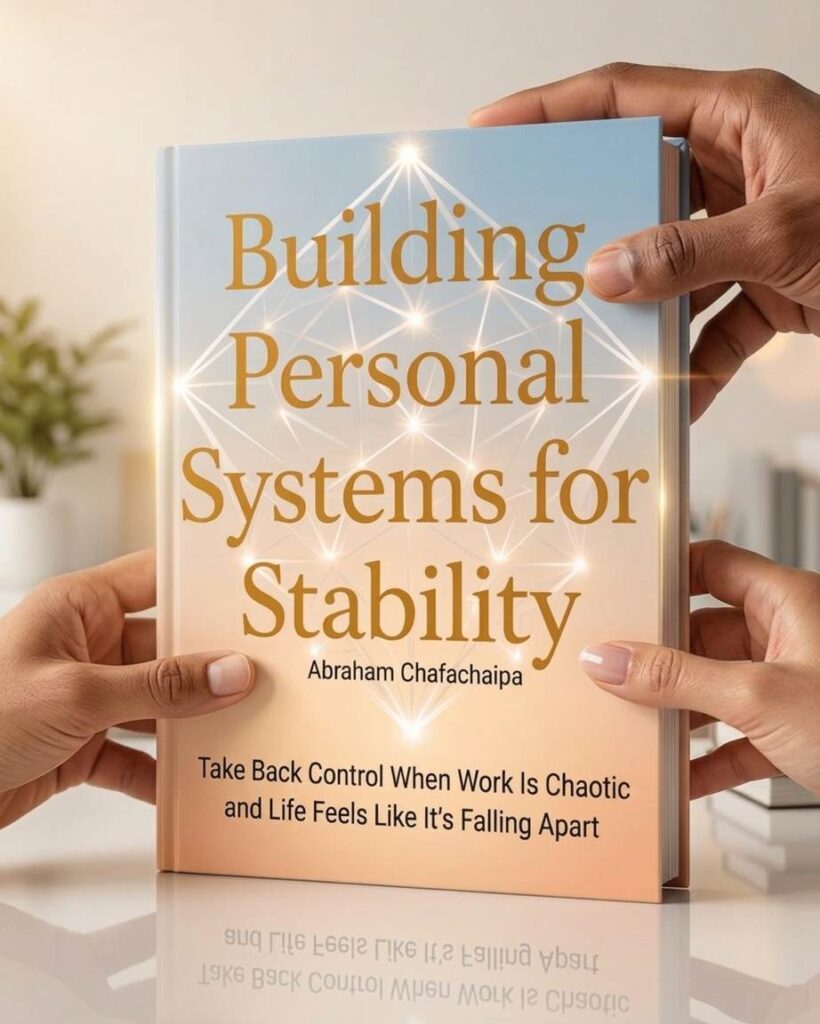
High-stakes project management requires zero pyrotechnics. A functional structure is all it takes.You need a better operating structure.
Your attention is finite.
Your commitments are numerous.
Your environment is unpredictable.
Simultaneously, your capacity fluctuates.
So stop building a professional life that requires you to be at your absolute best every day.
Build one that can absorb pressure.
Build one that knows what deserves your attention.
Build one that can switch modes.
Build one that can recover.
Build one that can reset.
Engineer a structure that holds up when the week you planned collapses into the week you never saw coming.This is what Building Personal Systems for Stability is for.
Not squeezing another 10% of productivity out of an exhausted person.
Building the infrastructure that allows a real human being to keep moving when work is chaotic and life feels like it’s falling apart.
If this describes someone on your team, share it with them.
But if it describes you — the one who keeps saying:
“I just need to get more disciplined.”
Their bottleneck is infrastructure. Everyone keeps calling it discipline.
Bridge that gap, and your operational capacity multiplies.
Which one are you — the manager watching it happen, or the one saying that line? Tell me in the comments.
Frequently Asked Questions
How can I prevent workplace burnout when managing multiple projects?
Start by protecting your highest-value attention. Separate deep work, shallow work and recovery into distinct operating zones rather than allowing meetings, messages and administrative tasks to fragment the entire day.
What is the best way to manage multiple high-priority projects?
Avoid treating every project as equally demanding at every moment. Identify which work requires your highest-quality attention, protect that time, and batch lower-complexity work separately.
Can time management prevent burnout?
Time management can help.But it may not be sufficient when the underlying problem involves competing commitments, information overload, difficult decisions and unpredictable conditions. A broader Personal Operating System addresses those areas together.
What is a Personal Operating System?
A Personal Operating System is a framework for producing reliable results across changing conditions. It goes beyond habits and routines by connecting priorities, attention, commitments, decisions, recovery and review.
Why does working harder sometimes make burnout worse?
Working harder can increase output temporarily.However, if the underlying system creates constant interruptions, competing priorities and unresolved commitments, additional effort can simply increase exhaustion without solving the structural problem.